

To the extent that historical press releases reference BMW Manufacturing Co., LLC as the manufacturer of certain X model vehicles, the referenced vehicles are manufactured in South Carolina with a combination of U.S. origin and imported parts and components.
PressClub USA · Article.
BMW NA 50th Anniversary | 50 Stories for 50 Years Chapter 29: “The Third Generation BMW M5 [E39] V8 Power for the Executive Express
Fri Jul 25 18:16:00 CEST 2025 Press Release
Although invented in France, V8 engines have been indelibly associated with American cars—and American tastes—since 1914, when Cadillac introduced its “L-head” V8. Since then, a V8 engine has been de rigueur for any automaker hoping to sell cars to American customers, lest its automobiles be seen as underpowered, underequipped, or simply unappealing.
Press Contact.
Thomas Plucinsky
BMW Group
Tel: +1-201-307-3701
send an e-mail
Author.
Thomas Plucinsky
BMW Group
Related Links.
Although invented in France, V8 engines have been indelibly
associated with American cars—and American tastes—since 1914, when
Cadillac introduced its “L-head” V8. Since then, a V8 engine has been
de rigueur for any automaker hoping to sell cars to American
customers, lest its automobiles be seen as underpowered,
underequipped, or simply unappealing.
BMW is no exception. In
1956, BMW introduced its first V8, the Oldsmobile-inspired M502, in
several cars aimed squarely at the US market. When that engine went
out of production in 1965, BMW powered its small cars with inline four
cylinder engines, its larger and more upscale cars with the company’s
signature inline sixes. Unfortunately, the latter engines reached
their limitations just as new V8-powered cars from Lexus were taking
the US by storm, forcing BMW to counter with its first new V8 in
nearly four decades. In 1992, the M60 V8 debuted in Europe with the
530i, 540i, and 740i; two years later, it would arrive in the US
powering all three models.
In Garching, BMW’s M division was
facing a similar conundrum. Throughout the early 1990s, the M5 and M6
were still powered by a variant of the 277-horsepower M88 inline six
that debuted in the 1978 M1. The engine had evolved considerably—in
the second-generation E34 M5, the catalyst-equipped, 3.8-liter S38
delivered 340 horsepower—but it had reached its developmental limit.
Moreover, its performance was nearly matched by the lighter and
smaller S50 (later S52) six that debuted in the 1992 E36 M3.
As
the M division began planning the E34 M5’s successor in 1993, it was
clear that a new engine concept would be required for the E39 M5. “We
had two opportunities: a V8 or a turbocharged six-cylinder,” said Alex
Hildebrandt, the E39 M5 Project Leader and Head of Product Management
for the M division then led by Karlheinz Kalbfell.
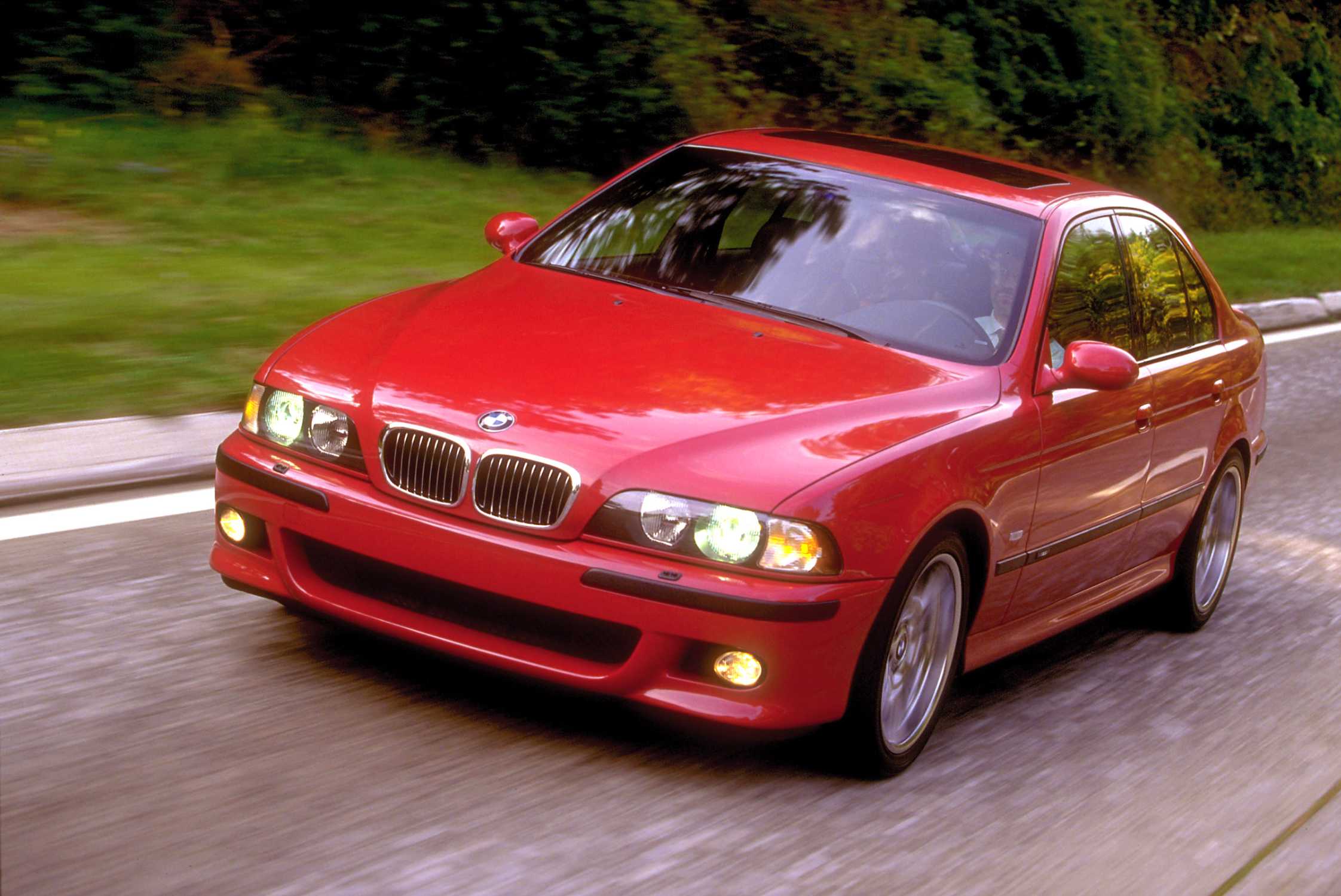
It wasn’t easy to choose between the two. “We were at the end of
the energy crisis in Europe, and there was some doubt about whether
this kind of car would find further demand on the market,” Hildebrandt
said. “Kalbfell was eager to play this card of fuel efficiency, which
didn’t mean we wouldn’t have powerful engines but that the efficiency
of the engines should be outstanding in comparison to the power. There
was no way to come to that with a V8, because in the end, eight
cylinders have to be fed. We had a lot of discussions about
turbocharging, but at the time turbocharging mainly added fuel
consumption and power at the upper end of the rev range, rather than
torque in the middle.”
While discussions about the M5’s engine
configuration were getting underway, BMW of North America was debating
whether to continue offering M cars in this market. The US market had
absorbed over 50 percent of E28 M5 production, or 1,227 cars, but BMW
NA had struggled to sell its costly successor, the E34 M5 with its
mechanically complex S38 engine. Ultimately, BMW NA moved just 1,476
E34 M5s, or 13 percent of total production. That scenario—together
with limited sales for the even more complex E30 M3—had seen BMW NA
reject the E36 M3 as too expensive and too high-maintenance for the
US, and to consider abandoning the M cars altogether.
The US
market was important to M’s overall viability, however, and Kalbfell
was eager to find an alternative powertrain that would allow the E36
M3 to be sold in the US at a more affordable price while better
suiting American driving conditions. In August 1993, BMW NA agreed to
an engine that sacrificed the “pure” M engine characteristics—high
revs and top-end horsepower, resulting in high technical complexity—in
favor of an engine with nearly as much torque, significantly lower
manufacturing cost, vastly reduced maintenance requirements, and a
more affordable retail price. The US-spec E36 M3 began arriving in
late 1994, and the response exceeded expectations handily. By the end
of 1995, enthusiasts had snapped up 8,515 examples.
That car’s
success demonstrated the appetite for M cars among American customers,
and it offered a convincing argument for an M5 built along similar
lines. Even so, Kalbfell continued to advocate for a six-cylinder
engine throughout 1994 and 1995, eager to retain this crucial link to
BMW’s heritage.
“Kalbfell believed that the heart and soul of
BMW was the inline six-cylinder, and that’s what he wanted as the
image leader for BMW, not a V8,” said Rich Brekus, then Head of
Product Planning for BMW NA. “I guess he saw the V8 as an American
thing, too large and wasteful, but I don’t think anyone could figure
out how to have better performance with a six than what they had with
the S38.”
They certainly tried, considering not only a
turbocharged inline six but a V6, which would have been a total
outlier within the BMW engine universe. “In the end, the company was
not prepared to spend the money to develop an engine for only 2-3,000
cars a year,” Hildebrandt said. “So this idea was buried, but we’d
lost two years of development, a lot of time.”
Eventually, Kalbfell had to concede that a V8 presented the best
technical solution for the M5, and that such an engine would suit the
car’s character, too. “We wanted to create a sports car for gentlemen,
and the V8 was a natural choice,” Hildebrandt said. “And in the end,
it was the only choice to bring the car to market in a reasonable
time. We were two years behind a regular development process, and if
we had gone even later there would have been no profit in the
project.”
Once the V8 concept was established, Hildebrandt took
it to Dr. Wolfgang Reitzle, then Board Member for R&D and Sales,
for final approval. “The economic figures were quite on the edge, and
we were projecting around 8,000-8,500 units over the rather short
lifetime of the model,” Hildebrandt said. “But Reitzle said to his
sales executives, ‘Okay, guys, this car is good enough to put 10,000
in the books.’ That was really the point where the E39 M5 finally came
to life.”
The compressed timeline already limited the development
time available for the V8 engine that had aroused so much discussion;
moreover, BMW had no racing V8 on which to base the M5’s powerplant.
That forced the M engineers to modify the series-production M62 V8,
which had superseded the M60 in 1996 with more displacement, higher
torque output, and improved fuel economy.
To turn the M62 into
the S62, and to do so quickly, the M division had to set aside one of
its most treasured virtues. “M’s philosophy at the time was
high-revving engines, which we couldn’t achieve with the V8 concept we
had,” Hildebrandt said. “We just said, ‘Okay, for this generation M5
we’ll forget about that, if we find other ways to reach the
400-horsepower level.’”
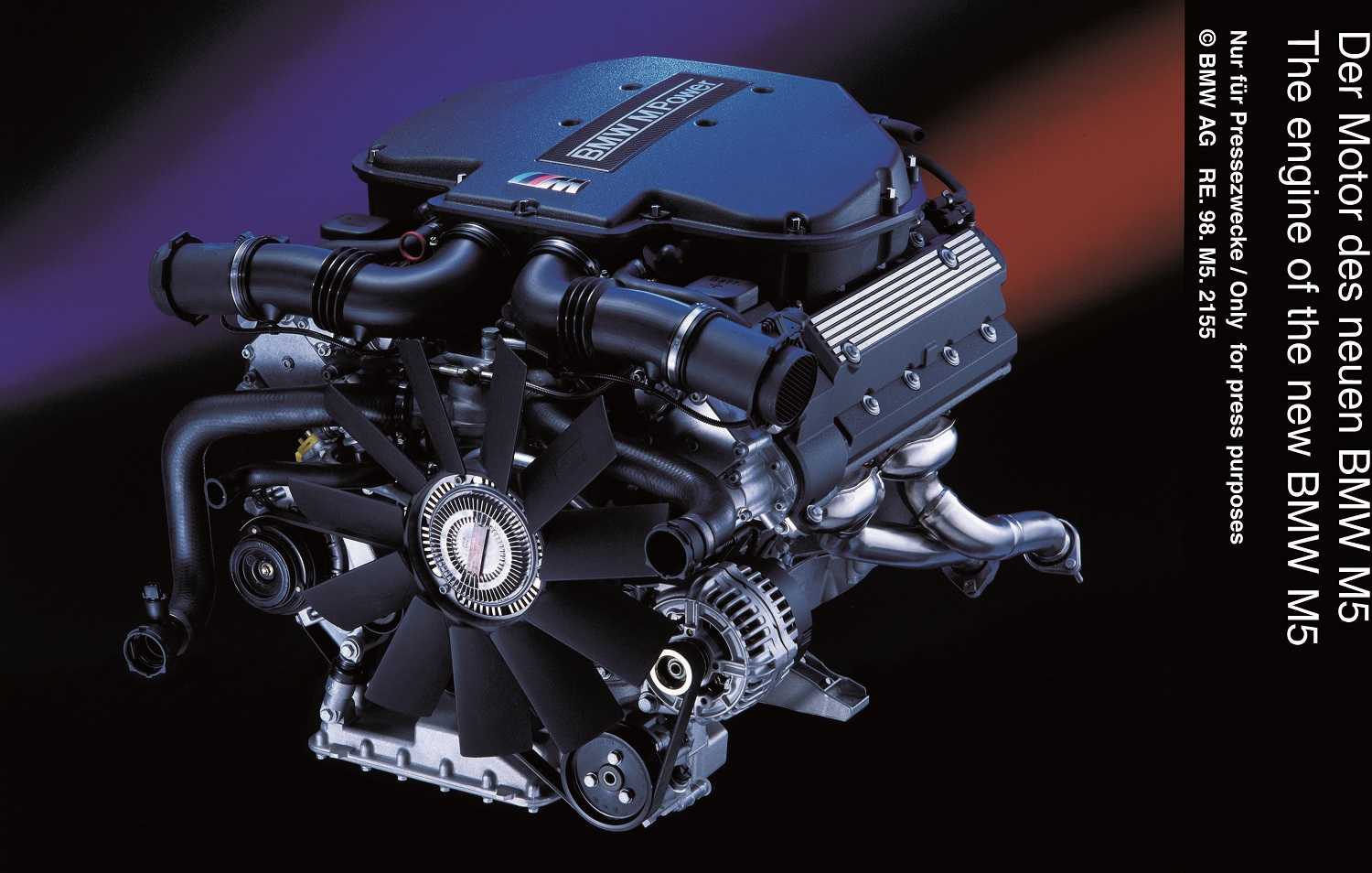
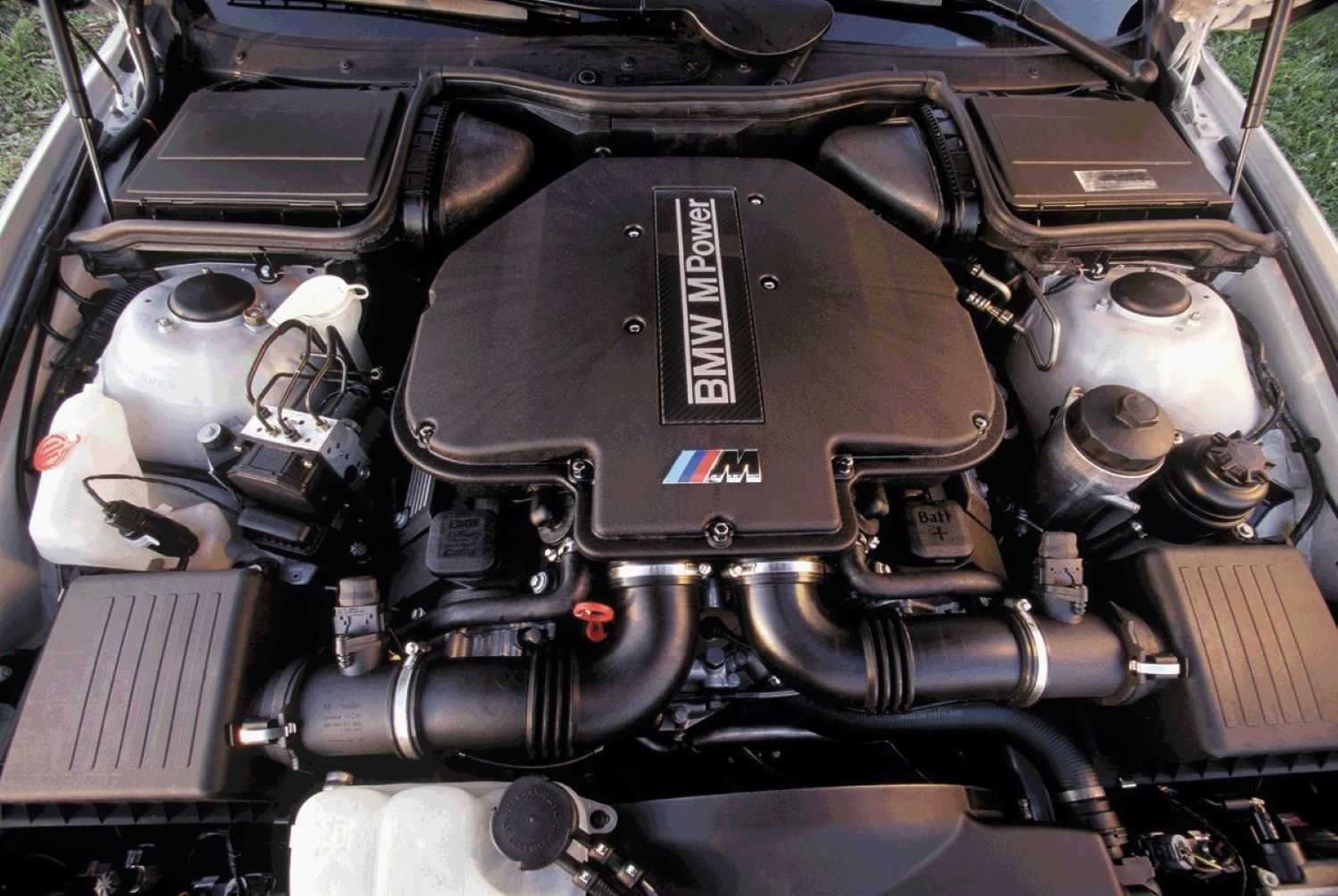
Under the leadership of engine designer Wolfgang Kreinhöfner, the
V8’s redline increased slightly nonetheless, from 5,700 rpm to
6,600—“a level where we felt safe,” Hildebrandt said—while
displacement increased from 4.4 to 5.0 liters within a redesigned
block with Alusil-plated cylinders. The cylinder heads retained the
production M62’s hydraulic valve tappets, marking the debut of this
maintenance-reducing feature on an M engine, with revised porting for
the flow of gases into the combustion chambers. In true M fashion, the
S62’s intake system was equipped with eight throttle bodies, one per
cylinder, controlled not by a linkage but by an electronic servomotor
that also functioned as a cruise control, top-speed limiter, and idle
speed governor.
Most importantly, the S62 got an upgraded oil
system to eliminate oil starvation under hard cornering. “If you did a
quick right-hand corner [with the M62], all the oil went to the left
cylinder bank,” Hildebrandt said. “The engineers created a
torque-controlled oil pressure system to ensure the oil supply to both
cylinders, and we also experimented a lot with the oil-control rings
on the pistons. We only had half the time to develop the engine, and
then two months before the start of production one of the long-term
test engines blew up. The team had to work really hard to eliminate
the mistake, but in the end we made it. And then we used this engine
for the Z8, as well.”
The S62 V8 was mated to the standard 5
Series’ driveline, including the Getrag 420G six-speed manual
transmission that was rated for engines producing up to 368 pound-feet
of torque: exactly the amount delivered by the S62, along with 400
horsepower. The transmission was followed by a limited-slip
differential, which was augmented by Dynamic Stability Control that
could be switched off altogether by the driver.
The M5 also got
stronger suspension components front and rear, stiffer springs and
dampers, and larger brakes than the standard 540i. Those upgrades made
the M5 a formidable weapon around the Nürburgring Nordschleife, which
it could lap in just eight minutes, 20 seconds with a skilled driver
at the wheel. That driver was usually Gerhard Richter, who took over
the M division in 1997, when Kalbfell was promoted to lead BMW’s
global marketing department. Richter had been Head of BMW M Technical
Development since 1994, and he performed final testing of all of BMW
M’s automobiles. “There aren’t a lot of race drivers who have as many
laps around the Nordschleife as Gerhard Richter,” Hildebrandt said.
“He had some strict ideas about what an M car should feel like,
including making the suspension as stiff as possible to make the car’s
steering and reactions as precise as possible.”
To ensure
stability at speed, the E39’s exterior styling (by Joji Nagashima) was
given subtle but effective aerodynamic upgrades from Marcus Syring,
who also designed the car’s unique 18-inch M Double Spoke wheels.
Syring gave the M5 a front spoiler inspired by that on a proposed Z3
coupe race car, which provided downforce as well as increased airflow
to the S62 engine; this was matched to a small Gurney flap on the
trunk lid.
While the car was under development, Brekus was
working to persuade BMW NA President Vic Doolan that a new M5 could
succeed in the US. “Doolan was adamant that he didn’t want to repeat
the disaster of the E34 M5, but agreeing with Germany on a reasonable
price point [$69,500] for the E39 M5 helped convince him, as did the
fact that the E39 was a great car even as a non-M,” Brekus said. “I
think Carl-Peter Forster deserves a lot of credit for making the E39
platform so good from the ground up.” BMW NA signed on, and the E39 M5
debuted at the Geneva Auto Salon in March 1998. Global production
began that October, with production of cars for the US slated to start
in September 1999. In the meantime, BMW NA’s product planners worked
to define the car’s specifications for this market. “BMW AG offered
the US market a wide array of options, which we tried to cull into a
more simplified offering for BMW dealers and showroom staff,” said
Scott Doniger, who replaced Erik Wensberg as BMW NA’s M Brand Manager
shortly after the Geneva show. (After European launch, Hildebrandt
left BMW M, too, with Albert Biermann completing the M5’s development
for the US.)
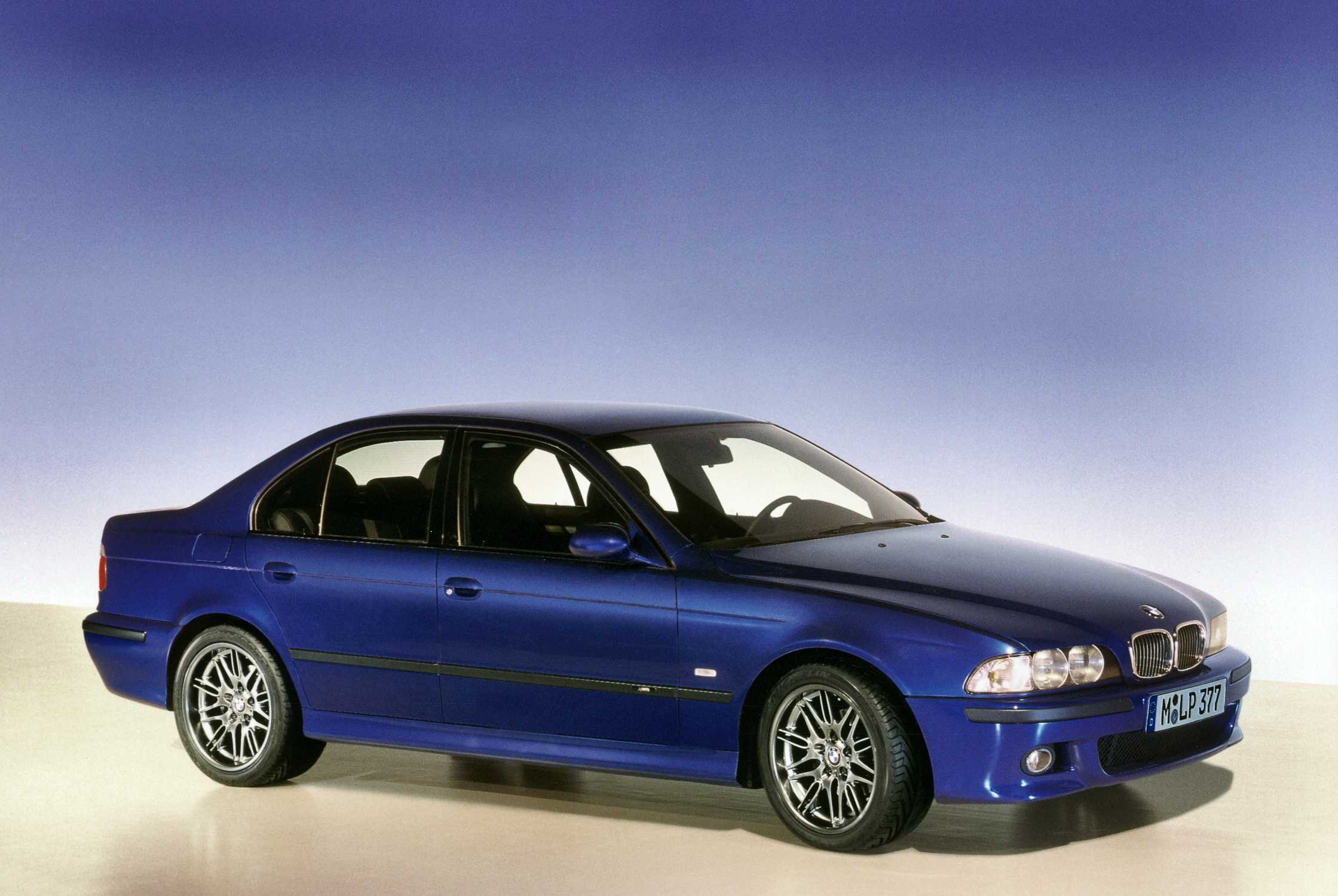
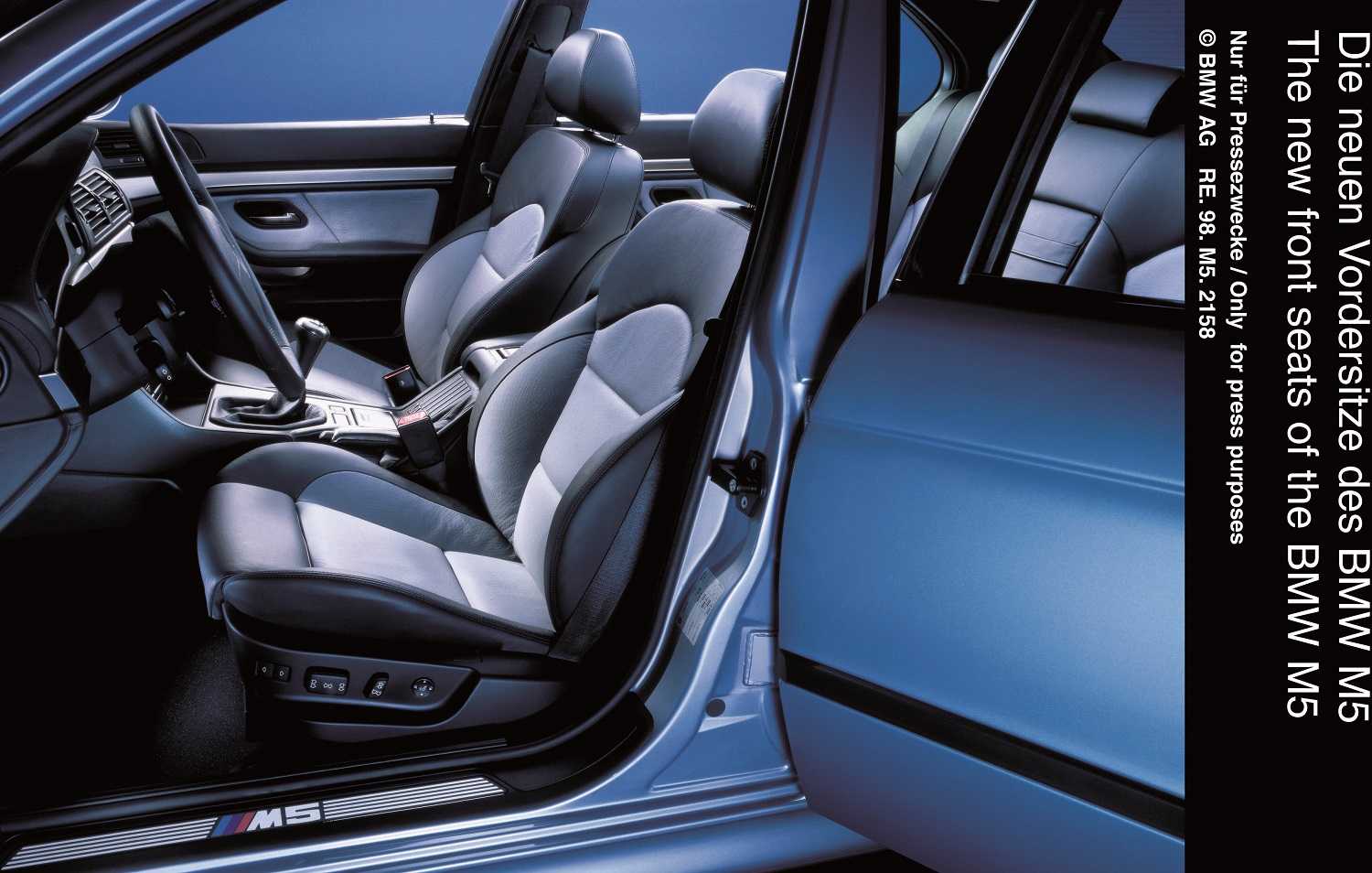
All M5s got heated sport seats, an M steering wheel and M
instruments, plus features like Xenon headlights and satellite
navigation that were optional on other E39s. The M5’s interior was
beautifully appointed, with extensive leather in a variety of color
combinations, including three two-tone options. Combining those
features with superb performance—the M5 could accelerate from zero to
60 mph in just 4.8 seconds—yielded what Doniger called “a superbly
balanced and responsive luxury sports car, something new that had
never existed before.”
“It’s one thing to throw a V8 into a
four-door sedan and make it go fast in a straight line,” Doniger said.
“A heavy front end typically unbalances a sedan, but the M5 didn’t
feel like a heavy sedan. The package just worked holistically, with
phenomenal handling balance under acceleration or braking, and
especially in cornering.”
About two months after the E39 M5 launched in the US, Doniger
left BMW NA for other opportunities. He was replaced as M Brand
Manager by Tom Salkowsky, who witnessed the M5’s incredible success in
the US market. “One of our biggest challenges was allocation: We
couldn’t get enough production to meet consumer demand,” Salkowsky
said. “One of our best talking points was the six-speed manual
gearbox, which was a major differentiator to the Mercedes E55 and
Jaguar XJR. The pairing of a manual transmission and near 400
horsepower [394 in US spec] was pure magic, and customers loved that
thisM5 was built for enthusiasts, for drivers who were skilled enough
to master a manual transmission and nearly 400 horsepower.”
To
ensure all M5 buyers had those skills, and to demonstrate the car’s
true capabilities, the $69,700 list price of every new M5 included a
day at BMW NA’s newly-opened Performance Center in Greer, South
Carolina. Driving BMW-owned M5s on the Performance Center’s track,
customers could discover their new cars’ capabilities in relative
safety.
The E39 M5 arrived in the US shortly after the E36 M3
went out of production following a five-year run of extraordinary
success in this market. “The sales momentum was building, the energy
and excitement around these dynamic M cars was growing, and it helped
the US gain a stronger voice in Munich,” Salkowsky said.
It
hadn’t been deliberately designed for the US—indeed, its “American” V8
had come about organically, as the answer to a technical problem
rather than a marketing concern—but the E39 M5 seemed tailor-made for
the US market. By the time production ceased in June 2003, US
enthusiasts had snapped up 9,198 examples—nearly half of the 20,482
E39 M5s built for worldwide consumption.
Even more surprisingly,
the M5’s production-based S62 V8 engine made its way to the racetrack.
With the six-cylinder S50 no longer competitive, Tom Milner’s
engineers adapted the S62 V8 to the Jet Racing E46 M3 for the Grand-Am
series. At the 2001 Daytona 24 Hour race, the car ran a competitive
fifth in the GT class until an air filter clogged with water. Later,
Steve Dinan would build S62-based racing engines for Daytona
Prototypes; Chip Ganassi’s BMW-powered Rileys won the Daytona 24 in
2011 and 2013, along with the Grand-Am engine manufacturer
championships in both years.
It was an impressive record for a production-based M engine, and
it offered a powerful endorsement for the V8 engine concept that would
drive subsequent M5s as well as the E9X M3. Those cars might not have
been built if the V8-powered E39 M5 had failed to catch on among US
enthusiasts. “Without the V8, we wouldn’t have had a chance to get the
US on board,” said Hildebrandt, “and without US volumes the project
wouldn’t have been profitable at all.”
Along with the E36 M3,
the E39 M5 turned the US into the world’s largest market for M cars
worldwide, helping to ensure the M brand’s future within BMW
worldwide. Moreover, the V8 engine helped catapult the E39 M5 into a
higher echelon of performance, setting the stage for all the M5s that
have followed. “The E39 positioned the M5 as a thoroughbred
super-sedan, and it created a great foundation on which future M5s—the
E60, F10, G30, and now G60—could build upon and elevate,” Salkowsky
said. “And overall, it helped BMW M position itself as a brand that
blended ultimate performance, innovation, and technology with
refinement.”
—end—